SSAS, Technical Analysis of Security Alert, ISPS Regulations, and SignalSecrecy
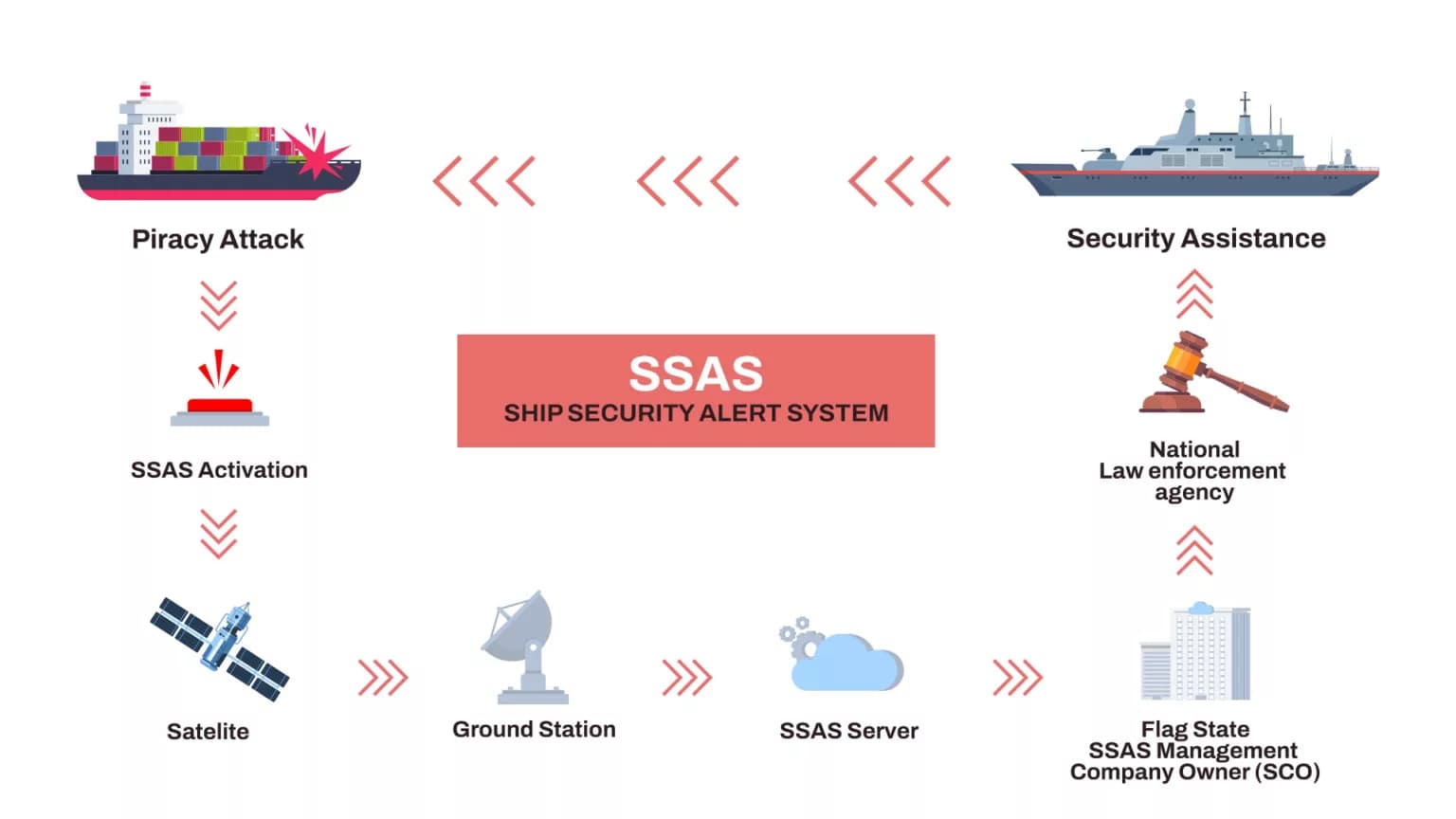
Evaluating the strategic role of the Ship Security Alert System in countering piracy and terrorist threats.
1. Introduction: SSAS and Proactive Security Strategy
The Ship Security Alert System (SSAS) is a critical security tool mandated by the International Ship and Port Facility Security (ISPS) Code, enacted following the events of September 11, 2001. The purpose of SSAS is to provide a confidential and discreet means for a ship to send a distress alert to the competent authorities, typically the Flag State Administration or the Company Security Officer (CSO), in the event of an attack, piracy, or other serious security threats.
The core distinction of SSAS from other maritime alert systems (like GMDSS DSC) is Secrecy: the alert signal must be transmitted without producing any alarm or audible indication onboard the ship, ensuring that the attackers are unaware that an alert has been raised.
2. Technical Foundation and Activation Mechanism
The effectiveness of SSAS relies on the reliability of its activation and transmission mechanism.
2.1. Fundamental Technical Requirements
According to SOLAS Chapter XI-2/6 and ISPS Code Part A, Section 6, SSAS must meet the following requirements:
- Covert Activation: The system must have at least two activation points strategically located far apart on the ship, enabling them to be operated secretly without arousing suspicion.
- Discreet Signal: Once activated, the system must not emit any sound, light, or indication onboard the vessel to warn attackers or uninvolved crew members.
- Independent Power Source: The SSAS must have a dedicated, independent backup power source, ensuring its functionality even if the ship's main power supply is disabled.
2.2. Satellite Transmission Mechanism
SSAS must utilize a radio communication method to send the alert signal. The most common medium is the Inmarsat satellite system (typically Inmarsat C or FleetBroadband).
- Security Data Packet: The alert signal is a concise data packet, including the ship's Identification Code (MMSI) and the latest GNSS Position.
- Response Time: The requirement for signal transmission time must be as fast as possible to ensure that responding agencies receive the alert promptly.
3. The ISPS Code and the Response Chain
SSAS is a tool within the comprehensive framework of the ISPS Code, designed to trigger a coordinated response chain.
3.1. The Role of the CSO and Authorities
When the SSAS signal is transmitted, it is not broadcast to all surrounding vessels but must be routed to:
- Flag State Administration: The country whose flag the ship flies is responsible for coordinating the initial response.
- CSO (Company Security Officer): The Company Security Officer must be immediately informed to implement the Ship Security Plan (SSP).
- Other Competent Authorities: Coastal states, VTS, or regional security/rescue centers, if required.
3.2. Continuous Position Reporting Requirement
A vital feature is the ability to send continuous position updates after the SSAS is activated. This allows responding authorities to track the ship's trajectory in real-time, aiding intervention and rescue processes. This is a technical requirement demanding integration between the SSAS unit and the GNSS positioning system.
4. Operation, Maintenance, and Challenges
The performance of SSAS depends on correct operational procedures and scheduled maintenance.
4.1. Activation Procedure and Periodic Testing
- Activation: Activating the SSAS must be considered a last resort, usually carried out by the Master or the Ship Security Officer (SSO) when facing an immediate and severe threat.
- Testing: The system must undergo periodic testing (e.g., monthly or as required by the Flag State) to ensure the activation points are functional and the signal is successfully transmitted to the competent authorities. This testing must follow strict protocols to prevent the transmission of False Alerts externally.
4.2. Technical Challenges
- Activation Point Placement: Determining the optimal location for the activation points is challenging. They must be easily accessible during an emergency but discreet enough not to be detected by attackers.
- Satellite Signal Reliability: Disruption or interference with satellite signals can delay or prevent SSAS signal transmission. The use of multi-system units (e.g., Inmarsat AOR-E/W) is necessary to ensure global availability.
5. Manufacturers and Standards
SSAS equipment must strictly comply with IMO Resolution MSC.147(77) and related technical standards.
| Manufacturer | Key SSAS Solution Features | Integration Role | | :------------------ | :------------------------------------------------------------------------------------------------------------------- | :-------------------------------------------------------------- | | Sailor (Cobham) | Provides SSAS functionality integrated into GMDSS/Inmarsat satellite communication terminals, known for reliability. | Deeply integrated into the Inmarsat C or FleetBroadband system. | | JRC | Standalone and integrated SSAS units, emphasizing anti-tampering and data security features. | Ensures secrecy and accurate GNSS position update transmission. | | Furuno | Offers compliant SSAS units that are easy to install and integrate into the electronic bridge system (INS). | Provides high reliability for satellite signal transmission. |
6. Partnering with Wheelhouse
Wheelhouse is committed to providing high-quality SSAS systems that fully comply with the ISPS Code and IMO requirements. We assist you with:
- Installation Location Consulting: Ensuring activation points are installed according to requirements for secrecy and accessibility.
- Response Chain Setup: Configuring the system to route alerts to the correct Flag State Administration, CSO, and Competent Authorities, ensuring an effective security response chain.
- System Testing: Providing periodic testing and maintenance services to confirm successful signal transmission without false alarming.
We offer proactive security solutions, helping your vessel be ready to respond to any maritime security threat.
To learn more about SSAS solutions, ISPS Code compliance, and maritime security support services, please visit our Solutions page.